Large Diaphragm Condenser Microphone
A personal journey through 13 years of recording experience — from a ¥180 dynamic mic to professional studio equipment
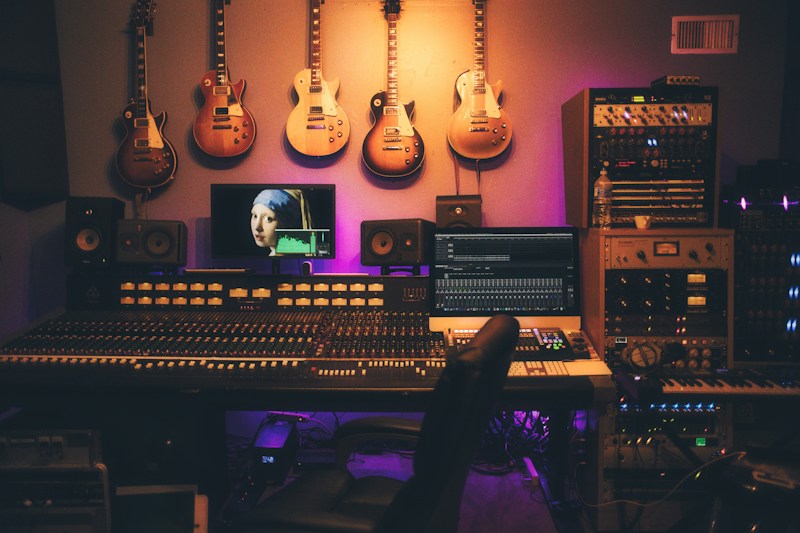
I started doing recording work in 2011. Back then, I rented a basement in Chaoyang District, Beijing—20 square meters. I put up acoustic foam myself, bought a set of secondhand equipment, and took on recording jobs.
My first microphone was a Takstar PCM-5550, a domestic dynamic mic that I bought on Taobao for 180 yuan. The recorded vocals were muffled, and the high frequencies couldn't come through—but I didn't know any better at the time. I thought that's just what recording sounded like.
The Moment Everything Changed
In 2012, a client came to record voiceover work and brought his own microphone—a Neumann U87. He set up the microphone, and when I listened through the monitors, it was completely different. The vocals were bright, the details were clear—lip sounds, breath sounds, everything was there. That was the first time I learned what a large diaphragm condenser microphone was.
After the recording, I asked him how much that microphone cost. He said 23,000 yuan, made in Germany. At the time, I could earn 4,000 yuan per month. 23,000 was half a year's income for me.
After that, I started researching microphones. Looking up information, browsing forums, watching foreign review videos. The category of large diaphragm condenser microphones—it took me about three years before I really understood it.

Large diaphragm condenser microphones are the gold standard for professional vocal recording
Understanding Large Diaphragm
What is a Large Diaphragm?
Inside a microphone, there is a diaphragm. Sound vibrates the air, the air pushes the diaphragm, and the diaphragm's movement is converted into an electrical signal. The diameter of the diaphragm determines its classification. In the industry, diaphragms with a diameter of 1 inch (25.4mm) or more are generally called large diaphragm, and those smaller than this are called small diaphragm. Around 1 inch is sometimes called medium diaphragm, but this classification isn't commonly used.
What is a Condenser Microphone?
Condenser microphone is a classification based on working principle. The diaphragm and a fixed backplate form a capacitor. When the diaphragm vibrates, the capacitance changes, producing an electrical signal. Condenser microphones require external power, usually 48V phantom power, supplied from a mixer or audio interface.
A large diaphragm condenser microphone combines these two characteristics: a large diaphragm with condenser-type working principle.
The advantages of large diaphragm are high sensitivity, good low frequency response, and a full-sounding voice. The disadvantages are large size, less precise directionality compared to small diaphragm, and greater sensitivity to ambient noise.
My Microphone Journey
In 2013, I saved enough money and bought my first large diaphragm condenser microphone. Not the U87—I couldn't afford it. I bought an Audio-Technica AT2035, which was around 1,200 yuan for the domestic version at the time.
The AT2035's diaphragm diameter is 34mm, the same size as the U87's diaphragm (34mm). Frequency response is 20Hz to 20kHz, sensitivity is -33dB. I didn't understand what these parameters meant when I bought it—I learned that later.
After using the AT2035, the recorded sound was indeed much better than that dynamic mic. The vocals had an airy quality, the high frequencies opened up. But compared to the U87 I had heard, there was still a gap. I couldn't articulate exactly where the difference was at the time—I just felt the U87's sound was more "expensive."

Rode NT1-A
The Rode NT1-A's noise floor is particularly low—officially rated at only 5dBA. I tested it, and it really is very quiet.

AKG C214
The AKG C214 has boosted mid-high frequencies—recording female vocals sounds very bright, but some voices can sound harsh.

sE Electronics sE2200a II
The sE2200a II's sound is relatively flat—doesn't stand out, but doesn't make mistakes either.
From 2014 to 2016, I successively bought several microphones to try. Each one I used for at least half a year, recording hundreds of hours of material. These microphones each had their own characteristics.
The Decision to Go High-End
In 2017, I saved 20,000 yuan and decided to buy a truly high-end microphone. I deliberated for three months, choosing between the Neumann U87 and AKG C414. In the end, I bought the AKG C414 XLII, at a domestic price of 16,000 yuan. I didn't buy the U87 because my budget wasn't enough—the U87 was over 25,000 yuan at the time.
After receiving the C414, I did a test. The same person, the same passage, recorded once with each of my five microphones—same audio interface, same preamp, same microphone distance. After recording, I played the five audio clips for a friend who does mixing and had him do a blind selection.
Blind Test Results
The ranking he selected basically matched the microphone prices, just the positions of C214 and sE2200a II were slightly off.
This test confirmed one thing for me: the price and sound quality of microphones are correlated—it's not mysticism. Of course, it's not a linear correlation; a 10,000-yuan mic isn't ten times better than a 1,000-yuan one. But the difference can be heard.
I've used the C414 until now—seven years. I replaced the shock mount once in between; the original plastic parts aged and broke. I replaced it with a Rycote one for just over 200 yuan—works better than the original.
Finally Comparing with the U87
In 2020, I had an opportunity to borrow a U87 and use it for two weeks. I carefully compared the U87 with my C414.
The U87's sound does have its characteristics—there's a very subtle thickness in the midrange, and recorded vocals sound very stable. In comparison, the C414's sound is more transparent, with more detail, but it's also more source-dependent. Some voices sound better recorded with the U87, some sound better with the C414—it's not an absolute hierarchy.
These two weeks of experience made me stop idolizing the U87. It's a good mic, but it's not the only choice. The C414 is sufficient for my needs.
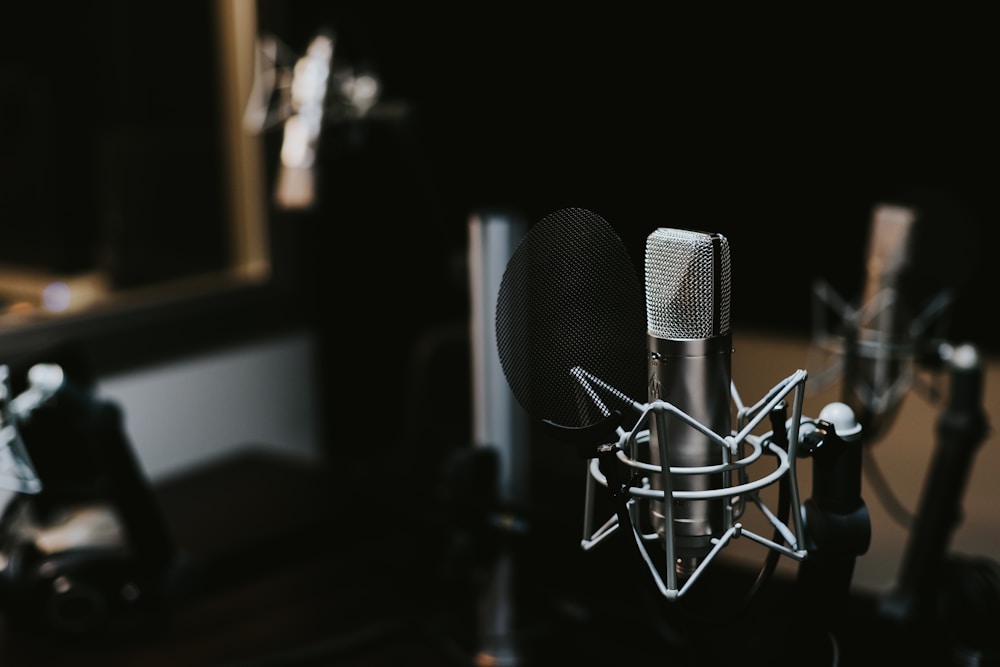
Different microphones suit different voices — there's no absolute "best"
What to Know Before Buying
Let me talk about what to pay attention to when buying large diaphragm condenser microphones.
Power Supply
Condenser microphones require 48V phantom power. Before buying, confirm whether your audio interface or mixer can provide this. Some entry-level audio interfaces don't have 48V output, or the voltage is unstable, which will affect the microphone's performance.
Environment
Large diaphragm microphones have high sensitivity and are very sensitive to ambient noise. If your recording environment isn't good, air conditioning sounds, computer fan sounds, and traffic noise outside the window will all be recorded. I've seen people spend 5,000 yuan on a microphone only to have recordings full of noise floor—the problem wasn't the microphone, it was the room.
Pop Filter
When recording vocals with large diaphragm mics, plosives (consonants like P, B, T) create airflow that directly impacts the diaphragm, causing significant low-frequency noise. You must use a pop filter—metal or nylon fabric both work—placed between the mouth and microphone, 10 to 15 centimeters from the mic.
Shock Mount
Condenser mics are sensitive to vibration—vibrations from tables and floors will transmit to the microphone. You need to use a shock mount to suspend the microphone and isolate physical vibrations.
Storage
Large diaphragm condenser microphone diaphragms are very thin metal-coated membranes that are sensitive to moisture. When not in use, store in a dry place—preferably a dry box. I bought an aluminum case for my C414, put desiccant inside, and change it every three months.
My Current Studio Setup
I currently have four large diaphragm condenser microphones in my recording studio:
AKG C414 XLII
¥16,000Purchased 2017
Main vocal microphone
Audio-Technica AT4050
¥6,500Purchased 2019
For recording acoustic instruments
Warm Audio WA-87
¥4,000Purchased 2021
U87 clone, excellent value for money
Rode NT1 5th Gen
¥2,200Purchased 2023
New generation, noise floor down to 4dBA
Four microphones together cost less than 30,000 yuan, covering 90% of my daily recording needs.
Advice for Beginners
My Recommendation for New Buyers
People ask me what microphone beginners should buy. My advice is to first buy something in the 1,000 to 2,000 yuan range, use it for a year or two. Once your ears are trained and you know what sound you want, then consider upgrading. Buying a microphone costing tens of thousands right away—if you can't hear the difference, you're wasting money.
Brand-wise, Rode, Audio-Technica, AKG, sE Electronics, and Warm Audio are all worth considering. These brands have many options in the 1,000 to 3,000 yuan range with stable quality control.
What to Avoid
Avoid those no-name brand microphones. The "large diaphragm condenser mics" on Taobao for a few hundred yuan—many have falsely advertised diaphragm sizes, rough craftsmanship, and develop problems after a few months of use. "You get what you pay for" basically holds true for microphones.
13 Years of Experience
I've been doing recording for thirteen years and have broken three microphones. One was an early domestic mic—the diaphragm oxidized after two years of use. One was a Rode NT1-A—the shock mount broke and it fell on the ground, deforming the diaphragm. One was a borrowed MXL—got moisture damage and developed noise. Large diaphragm condenser microphones are not durable goods—they should be treated as precision instruments.
This Topic Runs Deep
That's about it for this article. The topic of large diaphragm condenser microphones is very deep—there's still polar pattern selection, diaphragm materials, circuit design, and other things I haven't expanded on. I'll write more when I have time.